
Quick answer
Early money is not about doing beautiful renovation work. It is about staying solvent: choose jobs with visible requirements, keep materials cheap, and avoid contracts that force multiple unknown purchases before you understand the inspection rules.
Money comes from controlled ugliness
The game premise rewards a comic version of low-cost renovation. The practical lesson is to spend only where the game checks quality and cut costs where the game only checks completion.
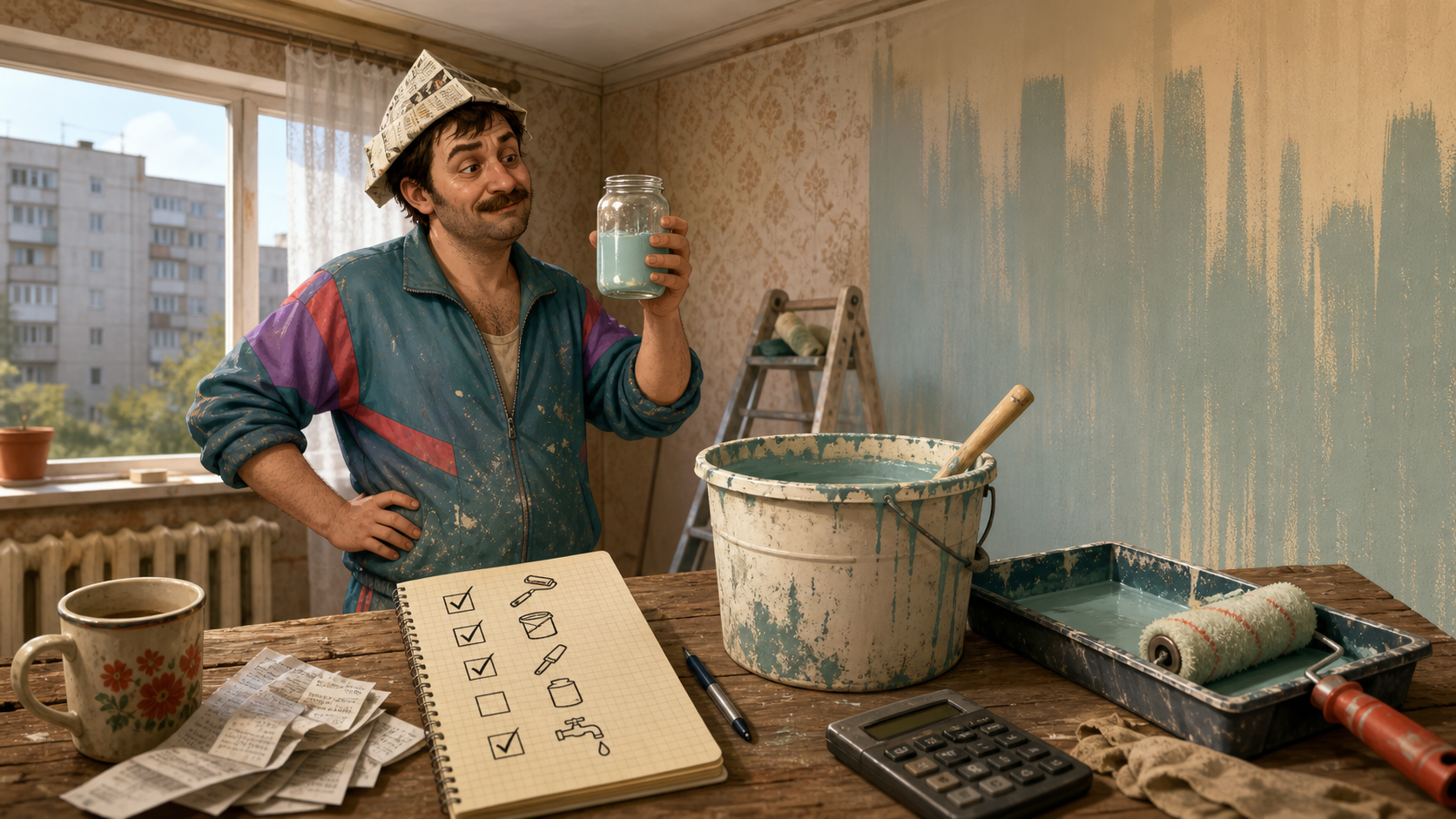
- Dilute paint only after testing how weak coverage can be while still passing the job state.
- Use hidden corners and furniture-shadow areas as observation zones: does the game inspect them or ignore them?
- Buy cheap tools when tool durability is less expensive than one premium purchase.
- Track whether broken tools create lost time, replacement cost, or job failure.
- Separate joke shortcuts from reliable money routes until the Demo/Playtest proves them.
Job profit scorecard
Use this table to turn community tips into repeatable strategy instead of random anecdotes.
Demo/Playtest profit scorecard
| Question | Good sign | Bad sign |
|---|---|---|
| Can you see the required work before buying materials? | Room damage and task list are obvious | Hidden pipe/electrical work appears after acceptance |
| Can cheap materials pass? | One diluted paint bucket or partial adhesive use reaches completion | Inspection forces full-quality materials |
| Can trash be removed quickly? | Window disposal or fast pathing saves time without a fine | Cars, neighbors, police, or penalties make it risky |
| Can the tool survive? | Cheap tool finishes the job or pays for itself | Breakage forces multiple replacements and loses the margin |
Reserve rule
Keep enough cash after every purchase for one replacement tool, one cheap material refill, and one unexpected penalty. If the game lets you be unethical, it may also make that shortcut expensive when it fails.
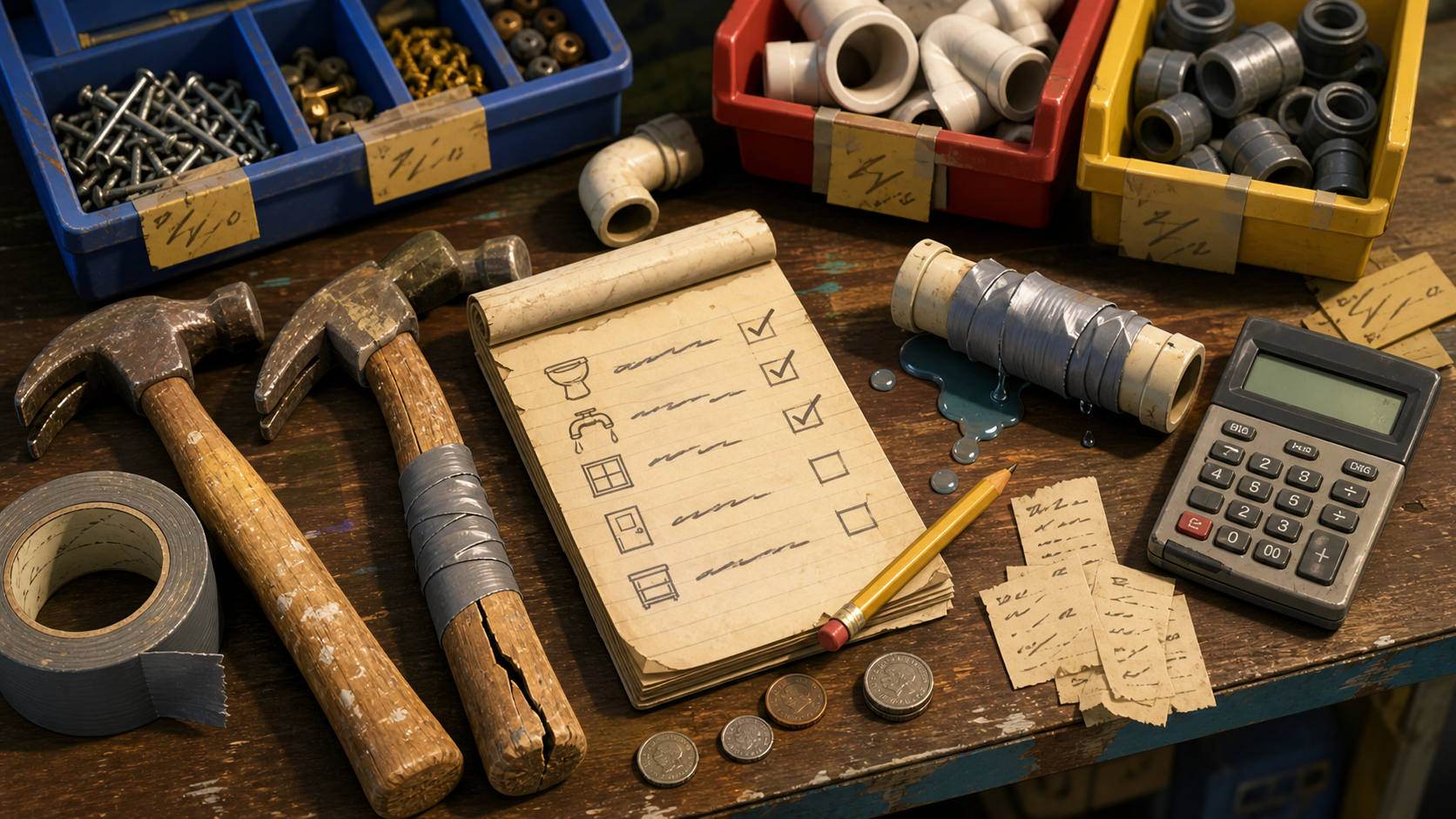
Cheap tools and duct tape artwork
Generated visual for low-cost tools, patch repairs, and profit-risk planning.